
As part of our 4-part series exploring the structural constraints impacting housing delivery in NSW, this first piece examines why rezoning delays are increasingly undermining development feasibility and slowing supply outcomes.
Authored by Adrian Miller, Associate Director at AT&L
Housing Targets Mean Little Without Deliverable Land
For landowners and developers, rezoning is often the single most value-defining step in the development lifecycle. It determines whether land can achieve its highest and best use, whether projects remain financially viable, and whether housing and employment land can actually be delivered to market.
Yet despite increasing pressure to accelerate housing supply across NSW, rezonings are taking longer than ever.
Over the past two to three decades, rezoning timeframes have more than doubled. What was once typically a two-to-four-year process is now often a decade-long journey from initial concept through to delivery.
At the same time, housing demand continues to intensify.
The National Housing Accord targets 377,000 new homes in NSW by 2029. Current delivery rates suggest the state is tracking toward a shortfall of approximately 156,900 homes.
On a quarterly basis, NSW is delivering around 11,500 homes against a required 19,600.
That means the state is currently delivering only around 60 percent of what is needed.
The consequences are no longer theoretical.
Delayed rezonings:
- Tie up capital for years
- Increase holding costs
- Undermine development feasibility
- Delay housing delivery
- Reduce competition in the market
- Push costs through to end purchasers
In an environment of escalating construction costs, compressed margins and tighter funding conditions, rezoning timeframes increasingly determine whether projects proceed or fail.
The issue is no longer simply about planning.
It is now an economic and housing supply issue.
Who Controls Rezoning Matters More Than Ever
In NSW, rezoning responsibility can sit with State Government, Local Government or private proponents depending on the scale, location and political context of the proposal.
While this flexibility is intended to support responsiveness, in practice it often creates inconsistency and uncertainty.
For landowners and developers, the identity of the decision-maker is frequently more important than the planning merits of the proposal itself.
Rezoning pathways generally fall into three categories:
- State-led rezonings
- Council-led rezonings
- Proponent-led rezonings
Each comes with different incentives, timeframes and risks.
Why Major Rezonings Require State Leadership
Rezonings associated with significant housing supply, employment generation, transport-oriented development or precinct renewal are increasingly difficult to deliver effectively through local government processes alone.
State leadership provides several advantages:
- Decisions are elevated beyond local political cycles
- Coordination between infrastructure agencies improves
- Rezonings align more closely to broader economic and housing targets
- Infrastructure sequencing becomes clearer

Without strong State involvement, rezonings of metropolitan significance frequently stall or become materially diluted.
The Structural Challenges Facing Councils
Over time, political pressure against development has resulted in a number of major rezonings being returned to councils.
The challenge is that many councils face significant structural limitations:
- Limited technical resources
- No direct accountability for metropolitan housing delivery
- Strong exposure to local political pressure
- Limited incentive to progress complex rezonings quickly
The result is predictable.
Decision-making slows.
Development-ready land supply contracts.
Strategically important housing projects become increasingly difficult to deliver.
Strategic Misalignment Is Slowing Growth
Increasingly, rezonings are assessed less on planning merit and more on alignment with strategic planning frameworks.
At a State level, planning intent is generally shaped through:
- Metropolitan strategies
- District plans
- Precinct strategies
- Structure plans
These frameworks are typically built around long-term housing, employment and infrastructure objectives.
Councils, however, operate within a different planning lens.
Local Strategic Planning Statements, housing strategies and place-based planning frameworks tend to focus more heavily on:
- Local amenity
- Character preservation
- Traffic impacts
- Incremental growth
- Community sentiment
While these approaches are not inherently inconsistent, they often produce very different interpretations of what growth should look like.
This tension has become increasingly visible across transport corridors and strategic precincts where State-led housing objectives conflict with local planning priorities.
The result is extended negotiation, political intervention and reduced certainty.
Even strategically justified rezonings can be delayed, reduced in scale or abandoned altogether.
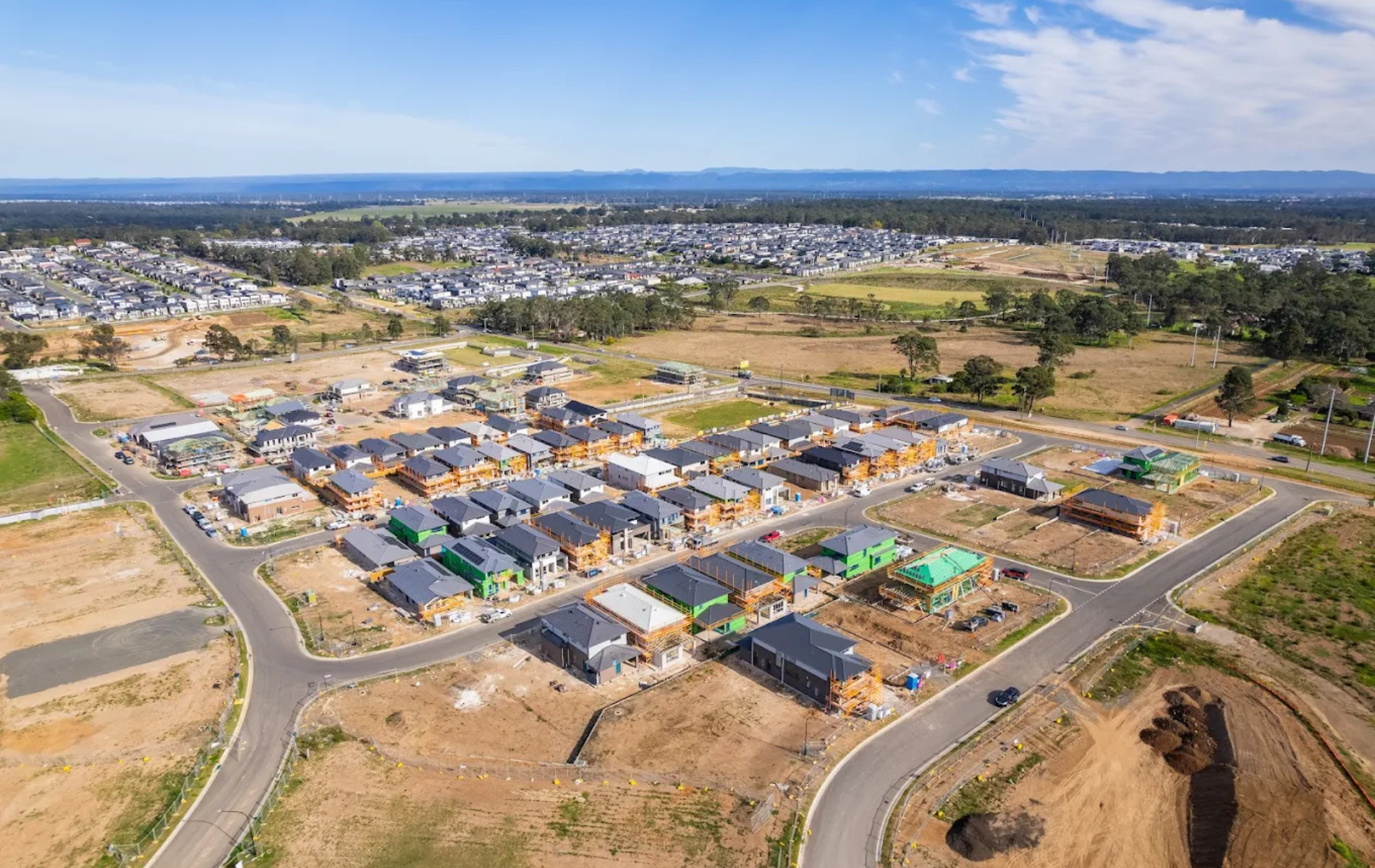
The Commercial Cost of Delay
For landowners and developers, rezoning uncertainty creates significant commercial pressure.
Projects can remain stalled for years while:
- Land holding costs continue accumulating
- Construction costs escalate
- Infrastructure commitments remain unresolved
- Contribution settings evolve
- Market conditions shift
Over time, feasibility margins compress.
Projects that may have been commercially viable at the start of the rezoning process can become unworkable before approvals are secured.
This has a direct impact on housing delivery. Less land reaches the market. Fewer projects proceed. Housing supply contracts further.
The Broader Economic Impact
NSW does not simply have a housing target problem.
It has a delivery coordination problem.
The current rezoning system increasingly struggles to align:
- Strategic planning intent
- Infrastructure delivery
- Commercial feasibility
- Political decision-making
Until these elements become better coordinated, rezonings will continue to under-deliver against strategic growth objectives. And the gap between planned housing supply and delivered housing supply will continue to widen.
Our View on the Path Forward
From our perspective, rezonings linked to major housing and employment outcomes increasingly require stronger State coordination, earlier infrastructure alignment and clearer delivery accountability.
The most successful rezonings over the next decade will likely be those that:
- Align servicing pathways upfront
- Operate at a precinct scale
- Balance planning outcomes with feasibility
- Maintain stronger coordination across agencies and councils
The market does not need more strategic intent.
It needs greater certainty around how growth will actually be delivered.
In the next article, we explore the issue now acting as the single biggest constraint on development delivery across NSW. Infrastructure. Read it here.
Relevant References
https://www.udiansw.com.au/housing-supply-shortfall-costing-nsw-billions-in-lost-revenue/
